100% Pure New York Maple Syrup
Sap to Syrup

How We Make Maple Syrup

Every spring, we tap the maple trees in our own woods, gather the sap, and boil it down at our family sugarhouse. Here's how it goes, step by step.
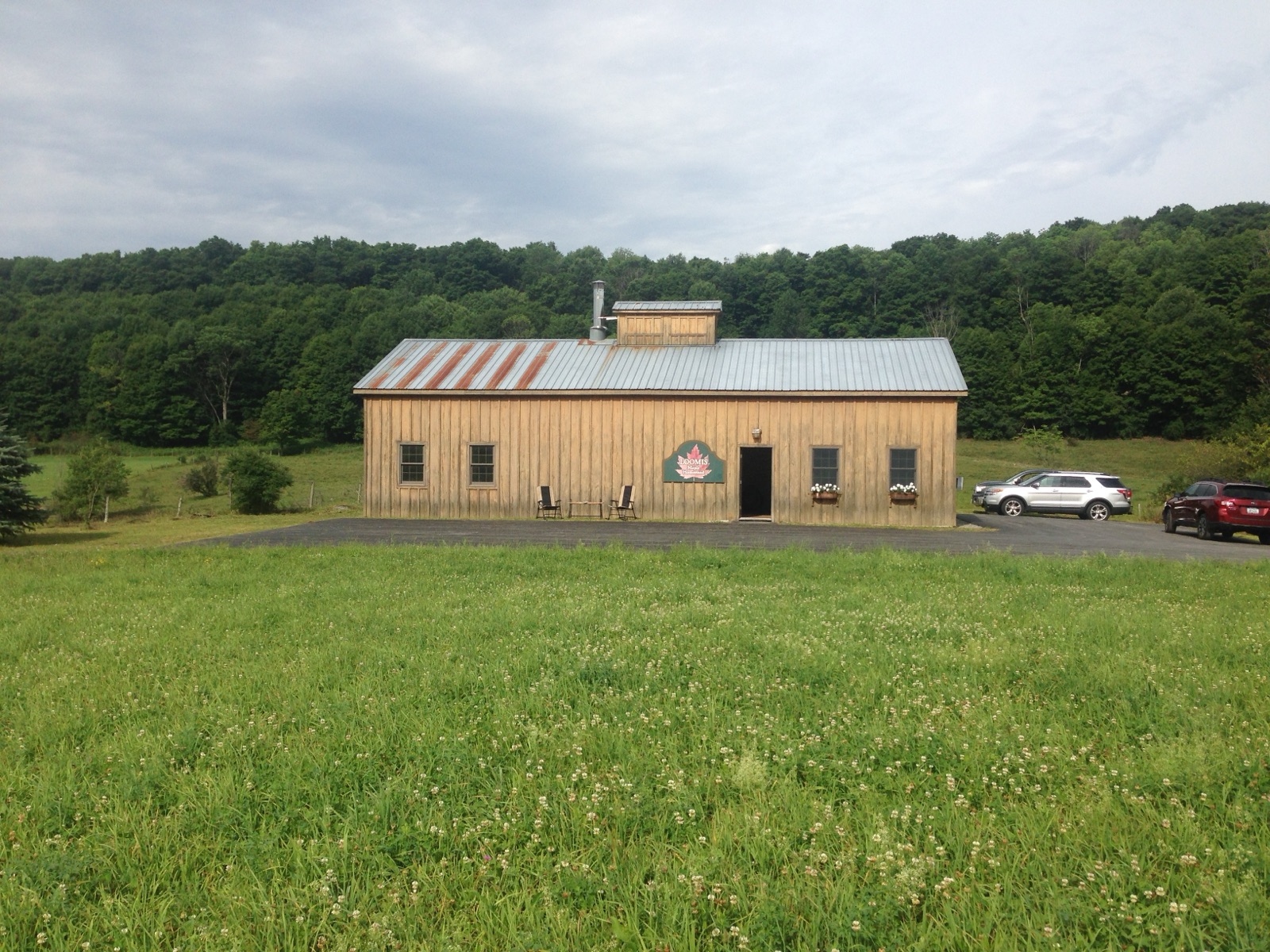
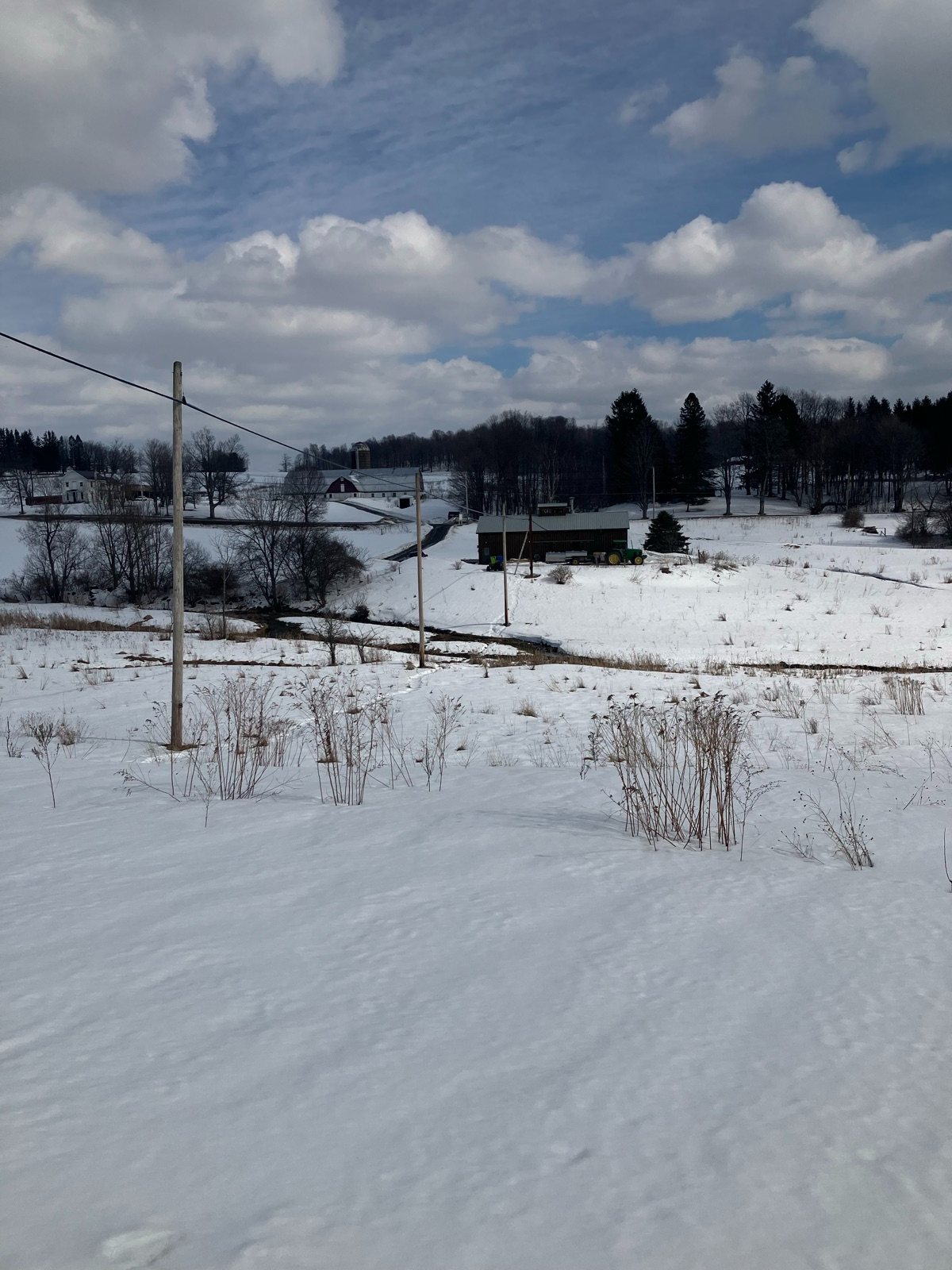
Our sugarhouse at the edge of the woods

This is where it all happens. Everything below is in the words and pictures of our own family. The page began as a school poster project by one of the kids.

Five Steps

From tree to bottle

Scroll along, or jump to a step. The photo keeps up with you.

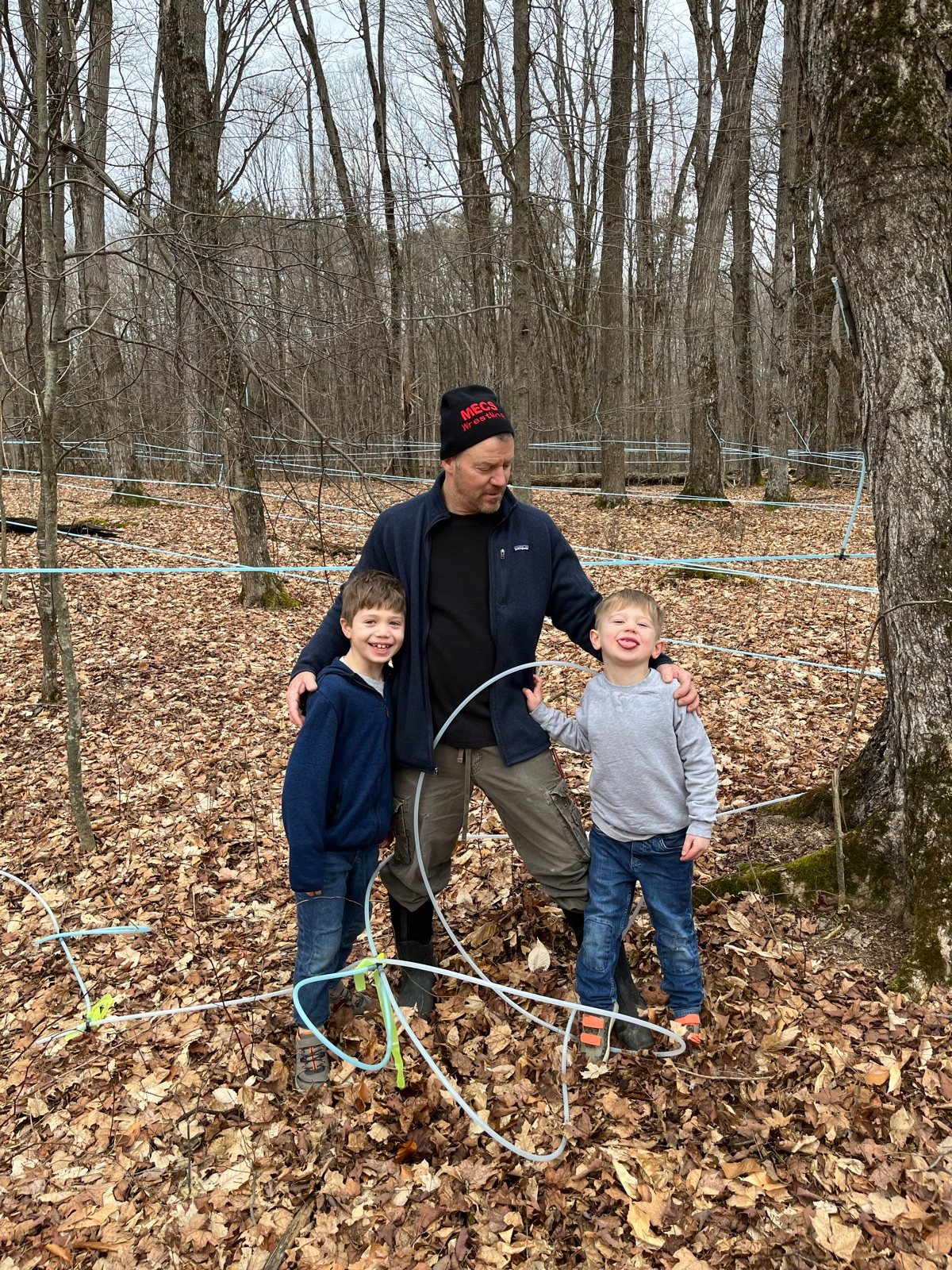
  1. Lines of tubing strung between the maples in our sugarbush
    01
    Late winter

    Tapping the trees

    In late winter, when the weather is just right, with warming days and cold nights, we drill small holes in the trees and hammer in spouts. Each spout connects to a tube, the tubes flow into bigger tubes, and those run all the way to the sugarhouse.

    Tapping doesn't hurt the tree. The small hole heals over after the season, and a healthy maple can be tapped for over 100 years.

  2. Our sugarhouse across the snowy fields in early spring
    02
    Early spring

    Gathering the sap

    Sap begins to flow on warm days in early spring, when the temperature climbs above freezing during the day. The lines are under vacuum, so the sap flows out of the tree, through the tubes and down to the sugarhouse, where it collects in large storage tanks.

    Fresh sap is about 98% water and only 2% sugar. It looks like water and is barely sweet.

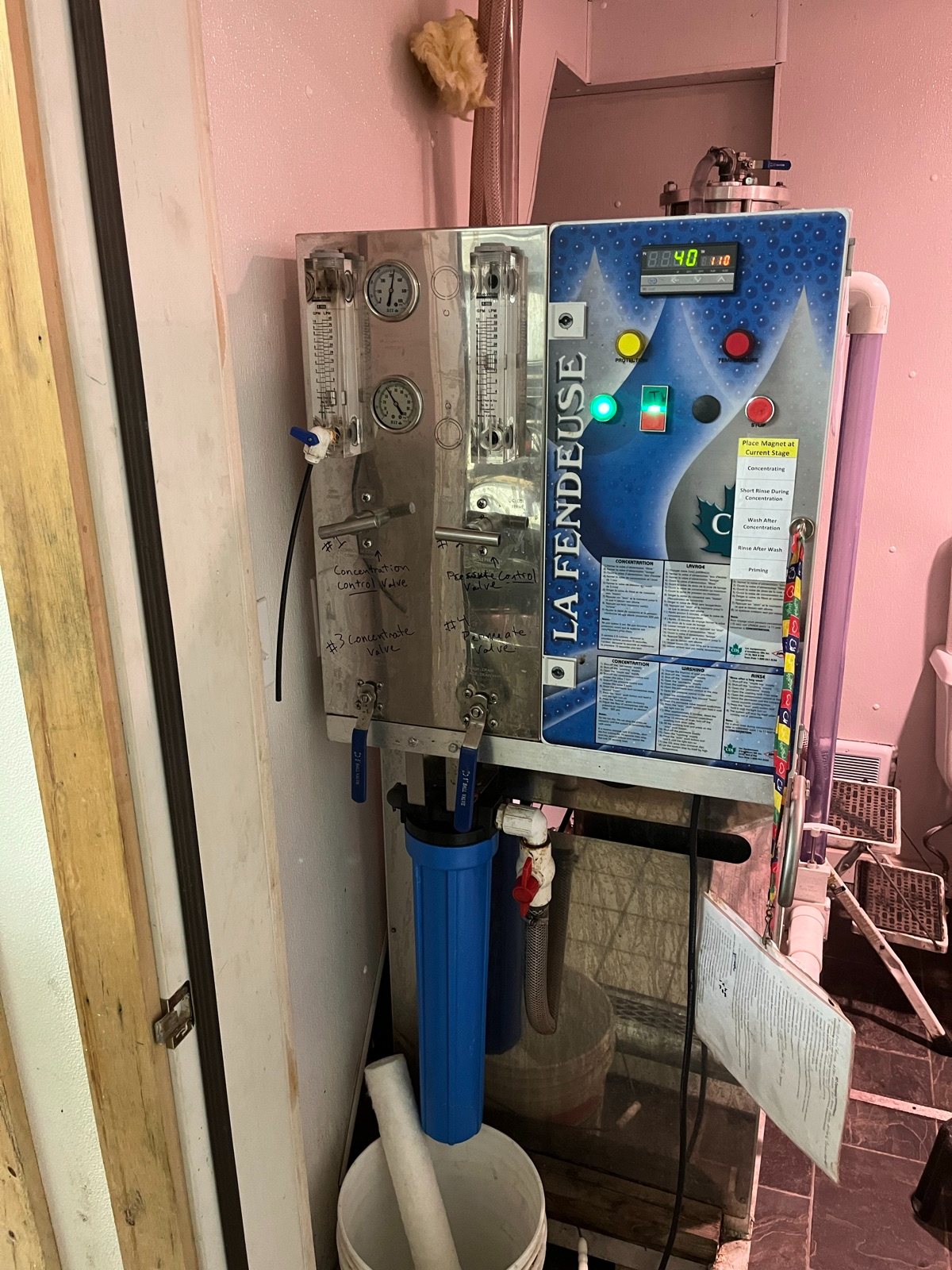
  3. The reverse osmosis machine in our sugarhouse
    03
    Before the boil

    Concentrating with reverse osmosis

    A reverse osmosis machine pulls water out of the sap before it ever reaches the pan. That raises the sugar content and saves hours of boiling and a lot of fuel.

    The machine pushes sap through a fine membrane that lets water through and holds the sugar back.

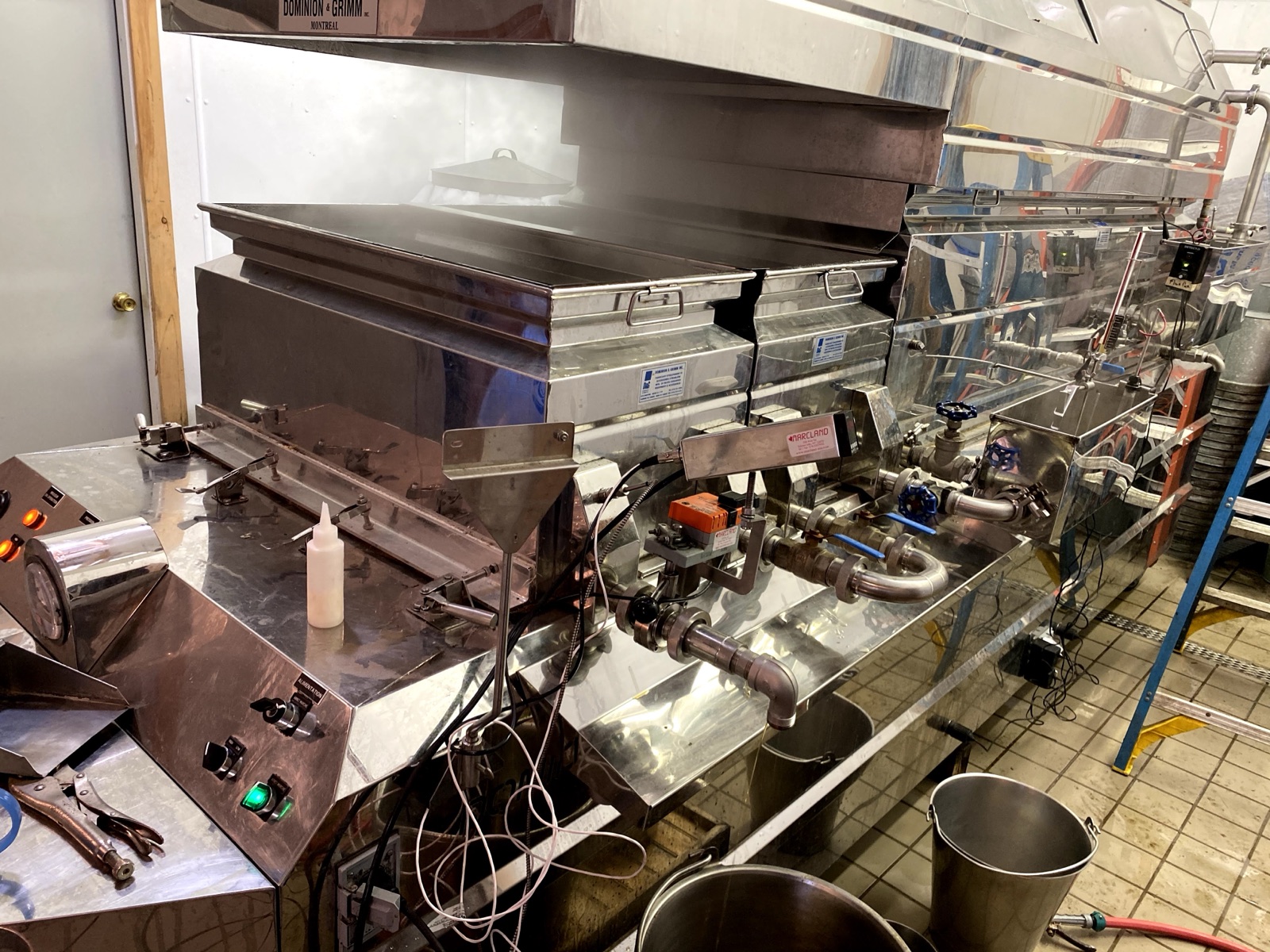
  4. Steam rising off the evaporator pans
    04
    The long part

    Boiling in the evaporator

    The concentrated sap is boiled in the evaporator, a long metal pan over a hot fire. As the water boils away as steam, the liquid gets thicker, darker, and sweeter. Once it reaches just the right sugar content, it has finally become maple syrup.

    It takes about 40 gallons of sap to make one gallon of syrup. Nearly all of it leaves the sugarhouse as steam.

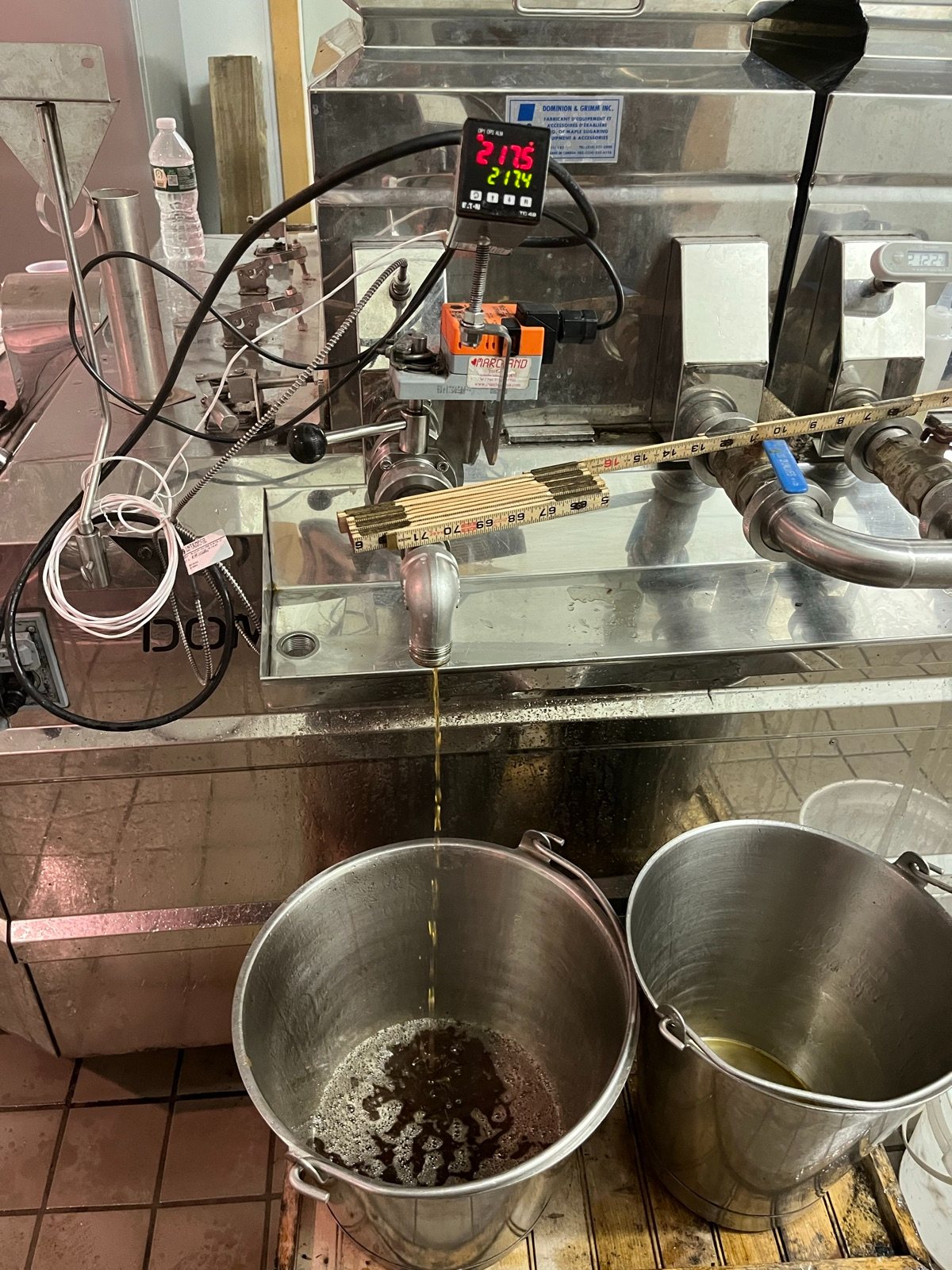
  5. Finished syrup being drawn off the evaporator into a pail
    05
    The finish

    Drawing off, filtering, bottling

    Syrup is done when it boils about seven degrees above the boiling point of water. It's drawn off hot, filtered to remove the fine grit called sugar sand, and poured into bottles and jugs while still hot, which seals them. Then it's ready for pancakes, waffles, and more.

    Boil it a little less and it can spoil. Boil it a little more and it starts to crystallize.

Try It

How much sap is in a bottle?

Half pintGallon

To fill a quart of syrup, we gather about 10 gallons of sap.

About 9.8 gallons of that boils away as steam. What's left is the syrup.

Sap40 parts
Syrup1 part
Sweet Surprises

Things worth knowing

Pure and Natural

Real maple syrup versus the imitation

Real maple syrupImitation syrup
Made fromSap from maple treesCorn syrup and water
IngredientsJust one: pure maple sapMany, including artificial flavoring
How it's madeBoiled down from tree sapMixed together in a factory
Flavor and colorNatural, from the treeAdded in artificially
NutritionSmall amounts of natural minerals and antioxidantsMostly just sugar, with few nutrients
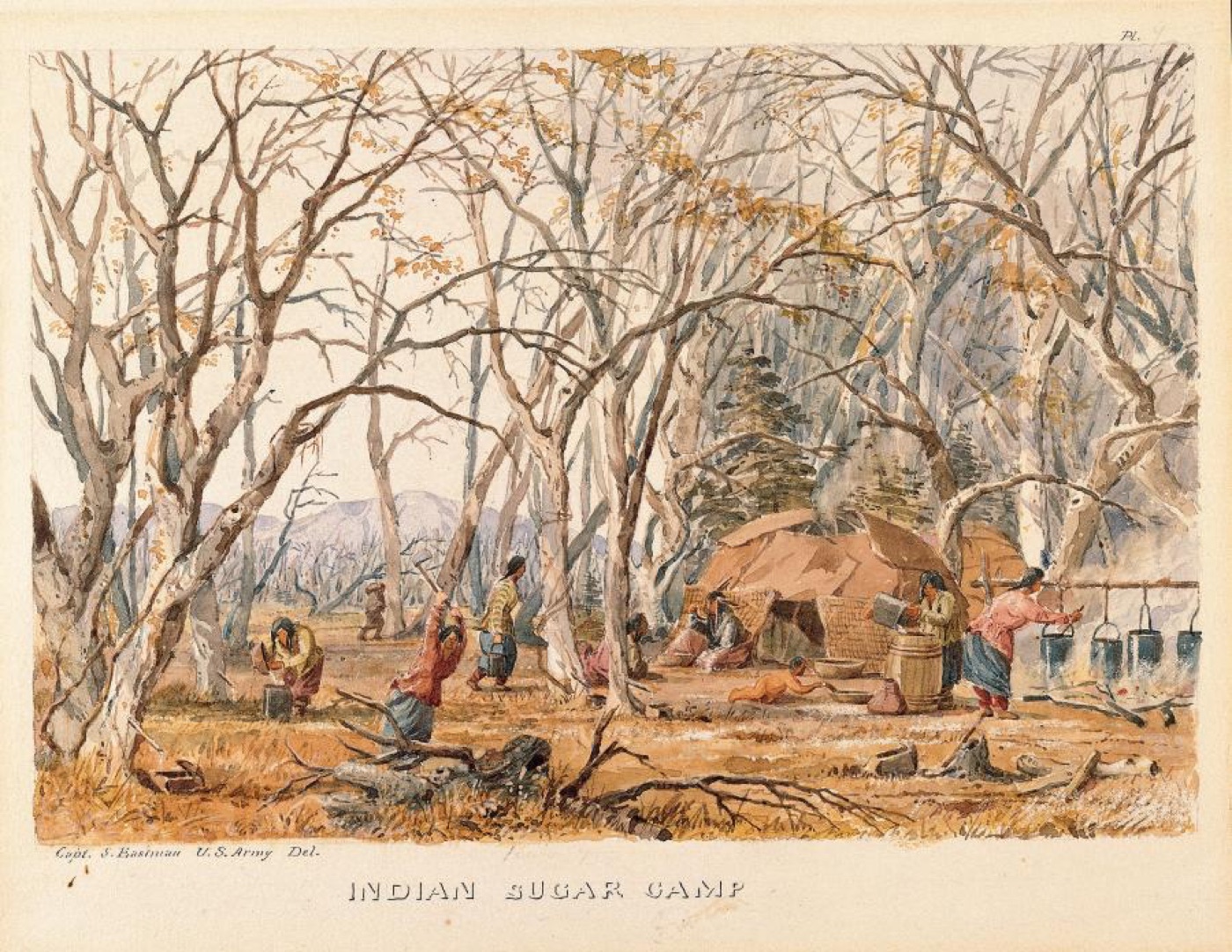
Indian Sugar Camp, a watercolor by Seth Eastman from 1853
Where It Began

An old craft

Maple sugar was first made by the Native American peoples of the Northeast, including the Haudenosaunee, long before anyone else arrived. This watercolor by Seth Eastman, painted in 1853, shows a sugar camp: sap gathered from the trees and boiled down in kettles over open fires.

The tools have changed. Tubing, vacuum, reverse osmosis and a stainless evaporator do the work that buckets and kettles once did. The idea is exactly the same: take the water out, and keep what the tree gave you.

Taste the Result